
All services / AI automation
AI automation
The repeated step, taken out of the person.
AI automation is the work a team does the same way every day, moved into a flow they can open and see. An order, a WhatsApp message, a campaign, a line alert. n8n holds the steps that must stay the same. OpenAI, custom GPTs, and agents handle the part that has to read language. Python, Next.js, and the MERN stack are how we build the product around that flow. The system you already trust stays the record.
What AI automation is
AI automation is software that carries a repeated business step so a person does not have to type it again. Dafi Labs builds that step inside the tools a company already uses. Fixed work runs in n8n: the route, the record, the handoff, the approval. Work that needs a reading of language runs on OpenAI — GPT-6 Astra, GPT-6.1 Sol, or GPT-6 Luna — through the API, a custom GPT, or an agent that can call those flows as tools. The purpose is a faster step, a lower cost for the repeat, and a named person on the decision that still matters. Around that step the same studio builds the rest of the AI work: chatbots, agents, computer vision, model training, data modeling, data management, voice, and the software the team uses.
The repeat has an owner
The flow is drawn. A teammate can open it, pause it, and see which step ran.
Language goes to a model
A message, a ticket, or a draft is read by an OpenAI model, a custom GPT, or an agent. The route after that reading is a rule.
The record stays put
The CRM, the inbox, the POS, or the line system you already trust keeps the fact. The automation writes into it.
A person keeps the exception
Money, a public post, a delete, and a customer who is already upset stop for someone on your team.
Where the same pattern is applied.
The room changes. The pattern does not. Find the step that repeats, keep the record where your team already looks, and measure whether that step got faster.

01 · The conversation
WhatsApp AI assistant
A customer writes on WhatsApp. The assistant answers from your menu, your products, or your policies, books what can be booked, and passes a person the case that needs one. It sits on the WhatsApp Business Platform, on a number the business owns. The thread stays in the inbox your team already watches, and the reply can be traced to the source it used.
- Answers drawn from your own material
- Booking and the questions that repeat
- A person when the case leaves the rule
02 · The pass
Restaurant order taking
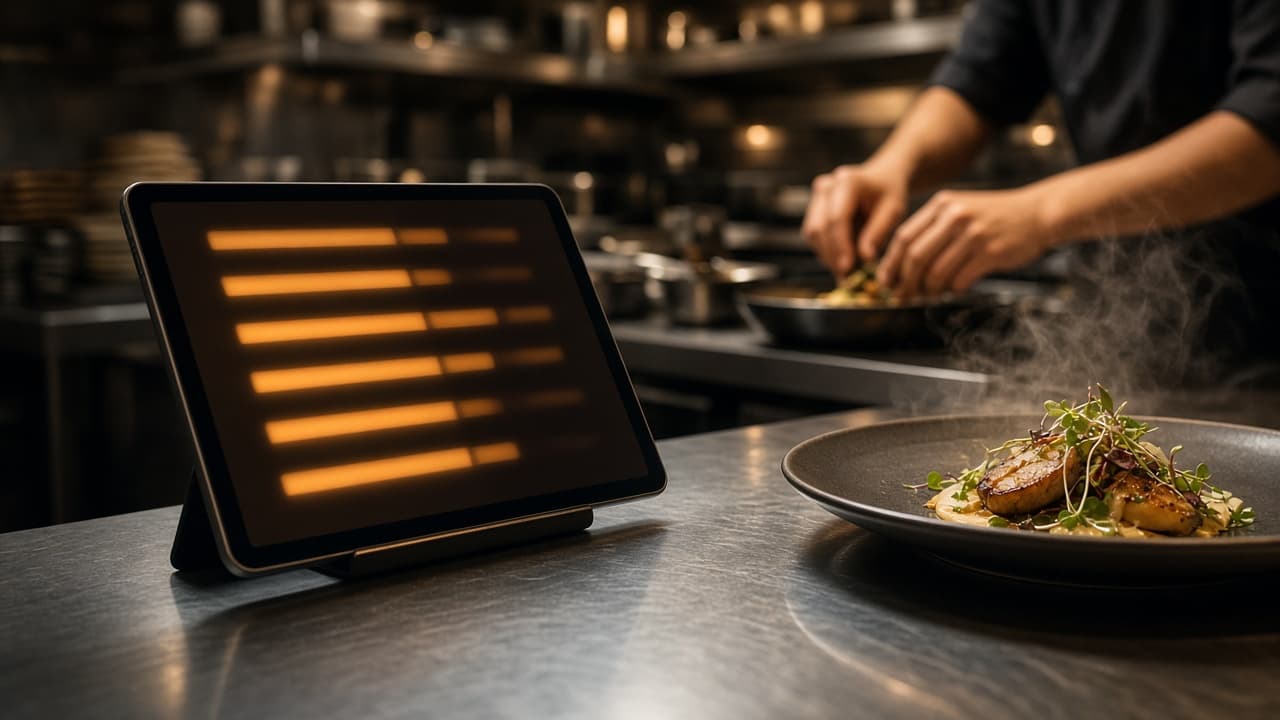
A guest orders on WhatsApp, on the site, or on a tablet at the counter. The kitchen receives a ticket it can read, with the modifiers and the items that are actually on tonight. Sold-out dishes are a rule in the flow, so the model cannot offer food the pass cannot make. The order lands in the system you already use to run service.
- Orders from chat, the site, or the counter
- A ticket the kitchen can trust
- The menu, the modifiers, and what is sold out

03 · The sequence
Email marketing
A campaign is a sequence with a trigger, a list, and a reply. We connect the tool you already send from. A model drafts the next note from an offer your team has approved. The first version of a new campaign waits for a person. Replies that are a purchase, a question, or a complaint are sorted before anyone opens a shared inbox and starts from the top.
- Sequences on the list you already have
- Drafts from an offer you approved
- Replies routed before a person reads them

04 · The desk
Social media
Social automation is the work around the post: the brief, the variants, the calendar, the comment that should not wait until Monday. Nothing goes out without the approval the brand asked for. Comments and inbound messages are read for intent and handed to the right person. When the picture itself has to be a film, that is the cinematic service. This one keeps the desk moving.
- A calendar the team can see
- Approval before a post leaves
- Comments and messages routed by intent

05 · The floor
Factories and operations
On a factory floor the repeated step is often a status, a quality note, a shortage, or a shift handoff typed into three places. Automation writes it once and tells the person who can act. Alerts fire when a limit is crossed. The machine that moves a part is the robotics service. This service is the information around that floor, joined to the order system your team already trusts.
- One write, read by the people who need it
- An alert when a limit is crossed
- The line system stays the record

06 · The product
Web applications
The website is often where the flow has to be visible: a lead, a support desk, an internal tool, an order screen. We build that surface in Next.js. When the product is a MERN application — MongoDB, Express, React, and Node.js — the automation calls that API. The flow starts where the form ends. A chat on the site uses the same source as the WhatsApp assistant, so the two channels do not invent two answers.
- Next.js for the product people use
- The MERN stack when that is what you run
- The same answers on the site and on WhatsApp
The AI work, in one package.
The flow is the repeated step. Around it is the rest of the AI a company asks for: a chatbot, an agent, vision, a model trained on its own material, the data that model is allowed to read, and the software people actually use. One studio. The first build is the one that pays back.
AI chatbots
A chatbot on the site, in the app, and on WhatsApp. It answers from your pages, products, and policies, books what can be booked, and hands a person the case that leaves the rule. A search bot is the part that has to be traceable. When the conversation is the whole job, that work also lives on the chatbots page.
Agentic AI
An agent reads a request, chooses a tool, looks at the result, and either finishes or asks again. The tools are your n8n flows and the APIs we write. Money, a public post, and a write that cannot be undone wait for a person. Agentic AI is for requests that arrive in too many shapes for one drawn path.
AI software development
The product around the model: a web app in Next.js, a MERN application, a mobile screen, an internal desk. Current models — GPT-6 Astra, Sol, and Luna — sit in the path after someone submits, speaks, or uploads. The model is part of the software, not a chat window stuck on the side.
Computer vision
A camera on a line, a photo of a part, a document on a desk. Detection, a count, a defect, or a field read off a page, trained on your parts and your light. The robotics service is the machine that moves. Vision here is the reading of what the camera, or the scan, actually shows.
Model training
When a general model keeps missing your material, we prepare the data, adapt or train, and measure it on cases you care about. You keep the model and the way your team runs it. If a simpler flow will do the job, we say so before any training starts.
Data modeling
The shape of the record: orders, tickets, menus, quality notes, conversations, the fields a model is allowed to return. A person on your team can explain the schema. The next step in the flow receives fields, not a paragraph it has to guess at.
Data management
The sources a model is allowed to read, cleaned and kept current. Documents, tables, and the system of record. A wrong answer usually starts in a stale file. We name the source, who owns it, and the path that refreshes it.
Voice assistants
GPT-Live when the assistant has to speak: a phone line, a kiosk, a counter. The same source as the text assistant, and the same handoff when the case leaves the rule. Speaking does not give the model a wider permission than typing.
Knowledge and documents
Answers drawn from your policies, manuals, contracts, and product files, with the passage that was used. Support, intake, and the question a new hire asks every week. If the file does not contain the answer, the assistant says so and hands the case on.
The same package, across industries.
The pattern does not change with the sector. The record does, and so does the decision that stays with a person. These are the rooms we already build for.
Manufacturing
Quality notes, shortages, shift handoffs, and a camera on the line. The arm that moves a part is the robotics service.
Hospitality
Orders, the kitchen pass, reservations, and a guest writing on WhatsApp.
Commerce and retail
Catalog questions, a cart that stalls, and the reply that used to sit in a shared inbox.
Healthcare
Appointments and the questions that arrive after the desk closes. A clinical decision stays with a clinician.
Education
Enrollment, the questions that repeat, and the admin between a class and a learner.
Real estate
A first reply to an inquiry, and a listing the assistant can describe from your own material.
Legal services
Intake and the retyping between matters. The advice stays with the lawyer.
Logistics
A shipment, an exception, and the person who can act before the phone rings.
Fintech
Support and the operations around accounts. A transfer that moves money waits for a person.
Media and brands
The calendar, the comment, and the draft. The film itself is the cinematic service.
Electronics
The information around a board and a product. The board and the firmware are the robotics service.
Startups
A first assistant, a first flow, and a product that can take the next user without a second rebuild.
A flow, a GPT, and an agent.
Most of a reliable automation is a path you can point at. The model is used where language has to be read. An agent is used when the request is too open for one path, and even then it can only call the tools you named.
01
n8n flows
The path is drawn: trigger, check, write, notify, stop. If a field is missing, the flow stops. Your team can see every node. This is the right shape for an order, a campaign step, a handoff, and anything that must happen the same way twice.
02
Custom GPTs
When the team already works in ChatGPT, a custom GPT packages the instructions, the files, and the actions for one job. It is a desk assistant for that job. The record of the business still lives in your system, and the GPT calls a flow when it needs to write there.
03
OpenAI agents
When a fixed path would become a maze, an agent on the OpenAI Agents API reads the request, picks a tool, and looks at the result. The tools include your n8n workflows. A send, a refund, a post, or a write that cannot be undone waits for a person.
Tools, models, and languages.
The stack is chosen for the step. A high-volume reply does not need the largest model. A judgment that commits the company does not run on the cheapest one.
The orchestration
Where the step is drawn, and where a person can stop it.
n8n
Workflows and agents in one place. Fixed steps stay fixed. An agent runs only when the request is too open for a single path, and it can call only the workflows you allow.
Custom GPTs
A scoped assistant inside ChatGPT: instructions, files, and actions for one job, calling a flow when the business record has to change.
Approvals
A human step in the flow before a send, a refund, a public post, or any write the team cannot undo.
The models
OpenAI, on the current API. The model is named in the design, so the cost and the judgment are a choice.
GPT-6 Astra
The flagship model for hard judgment and for code, when the step is expensive to get wrong.
GPT-6.1 Sol
Steady work that needs a strong reading, at a lower cost than Astra.
GPT-6 Luna
High-volume replies, classification, and routing, inside a schema the flow can trust.
Agents API
Sessions, tools, MCP connections, and sub-agents. The harness is OpenAI’s. The tools, the files, and the stop for a person are yours.
GPT-Live
When the assistant has to speak, on a phone line or at a counter, and the same rules apply as in text.
The build
Python for the model and the data. TypeScript for the product. The MERN stack when MongoDB, Express, React, and Node.js are the application you already run.
Python
Agents, evaluation, and the services a flow calls when the step is data or a model. The cases we measure live here.
TypeScript and Node.js
The APIs between n8n, OpenAI, WhatsApp, and the product.
Next.js and React
The site, the order screen, the internal desk. The flow starts where that screen ends.
Express
The API layer of a MERN application, when that is the stack the product is written in.
MongoDB
Orders, menus, conversations, and other records whose shape changes with the work.
PostgreSQL
The relational record when the numbers have to stay exact: money, inventory counts, and the audit of what the flow did.
What agentic AI is allowed to do.
An agent is a model in a loop. It reads the request, picks a tool, looks at the result, and either finishes or tries another tool. In this studio the loop is fenced. The tools are the n8n workflows and the APIs we wrote for your systems. Memory is the conversation in front of it and the record you already keep. We trace the run, so a wrong reply can be found and the step that produced it can be changed. Agentic AI earns its place when the request arrives in too many shapes for one drawn path. When the path is known, the path is what we build.
How a job is delivered.
A first flow is scoped after we have seen the step and the system it has to write to. A number below is a range for that part, once those two things are known.
- 01
The step
The first week
Which repeat costs the time, which system already holds the record, and which decision stays with a person.
- 02
The path
Drawn before it is built
The n8n flow, the model, and the cases that stop. Anything the model returns has a schema, so the next node receives fields, not a paragraph it has to guess at.
- 03
The build
Often 3–8 weeks for a first flow
The workflow, the assistant, and the screen if the team needs one. A restaurant order app or a new web desk can run longer. We say so before we start.
- 04
The measure
Before it is trusted
A set of real cases from your week. The question is whether the step got faster, and whether the model stayed inside the rule.
- 05
The team
Before we leave
The people who own it can pause a flow, change an instruction, and see a failure. The design goes with the automation.
What changes for you.
One studio for the flow and the product
The n8n workflow, the OpenAI agent, the WhatsApp assistant, and the Next.js or MERN app are one engagement. You are not hiring a prompt shop and then a separate development team to connect it.
Your tools
The automation writes into the inbox, the CRM, the POS, or the line system your team already opens in the morning.
A model matched to the step
Luna for the volume, Sol for the steady reading, Astra when the judgment is expensive. The name is in the design, and so is the reason.
A team that can run it
Handover includes the people. Pausing a flow and reading a failed run are ordinary for them before we step back.
Questions
What is AI automation?
AI automation is software that carries a repeated business step. Fixed work runs in a flow such as n8n. Work that needs a reading of language runs on an OpenAI model, a custom GPT, or an agent. Dafi Labs builds both, inside the tools a company already uses, and leaves a person on the decision that still matters.
What is the purpose of it?
The purpose is to take the retyping, the routing, and the first draft off the person who was doing them by hand. The step should get faster, the cost of the repeat should fall, and the record should stay in the system the team already trusts.
Do you replace our CRM, inbox, or point of sale?
The automation writes into the system you already use. Replacing that system is a different project, and we say so when the work actually needs it.
What is the difference between an n8n flow, a custom GPT, and an agent?
An n8n flow is a path that runs the same way every time. A custom GPT is a scoped assistant inside ChatGPT for one job. An agent chooses tools, including your flows, when the request arrives in too many shapes for one path. Money, a public post, and a write that cannot be undone wait for a person in all three.
Which OpenAI models do you use?
GPT-6 Astra for hard judgment and code, GPT-6.1 Sol for steady work at a lower cost, and GPT-6 Luna for high-volume classification and replies. Agents run on the OpenAI Agents API. GPT-Live is for an assistant that has to speak. The model is chosen per step, and named in the design.
Can the assistant run on WhatsApp?
Yes. We connect the WhatsApp Business Platform to the same source the site uses, so a guest gets one answer whether they write on WhatsApp or on the page. A case that leaves the rule is handed to a person, inside the inbox your team already watches.
Can you automate orders for a restaurant?
Yes. Guests order on WhatsApp, the site, or a counter tablet. The kitchen gets a ticket with modifiers, and sold-out items are blocked in the flow. The order is written to the system you already use for service.
What languages and frameworks do you build in?
Python for agents, evaluation, and model services. TypeScript, Node.js, React, and Next.js for the product and the APIs. The MERN stack — MongoDB, Express, React, and Node.js — when that is the application you already run. PostgreSQL when the numbers have to stay exact.
How long does a first automation take?
A first flow, once we have seen the step and the system it writes to, is often 3–8 weeks. A restaurant order app or a new web desk can take longer. The first week is for naming the step, the record, and the decisions that stay with a person.
Where does a chatbot end and automation begin?
A chatbot holds the conversation. Automation is the work that happens because of that conversation: the ticket, the booking, the CRM row, the kitchen pass, the campaign reply. We build both, and the chatbots service is the conversation on its own when that is the whole job.
What is included in the AI package?
Chatbots and WhatsApp assistants, agentic workflows, AI software in Next.js and the MERN stack, computer vision, model training on your material, data modeling, data management, voice, and answers drawn from your own files. The first build is the repeated step that costs you time. The rest of the package is here when the work needs it.
Do you train models and manage the data?
Yes, when a general model keeps missing. We shape the record, clean the sources the model is allowed to read, train or adapt, and measure it on real cases. You keep the model and the path your team uses to run it. If a flow is enough, we say so before training starts.
Do you build computer vision?
Yes. Detection, a count, a defect, or a field read from a document or a camera, trained on your parts and your light. The robotics service is the machine that moves. Vision on this page is the reading of what the camera sees.
Which industries does this cover?
Manufacturing, hospitality, retail, healthcare, education, real estate, legal intake, logistics, fintech operations, media, electronics, and startups. The pattern is the same. The record and the rule change with the industry. A clinical decision stays with a clinician, and legal advice stays with a lawyer.
Start with the step that repeats.
Tell us the tool and the step. We will say whether the first build is an n8n flow, a custom GPT, an OpenAI agent, or the screen around them.